EV Charger Cables Thefts Appear to be on the Rise in Concerning Copper Theft Trend
August 31, 2026
CBC recently reported concern from BC Hydro and Hydro Quebec that copper thefts at EV charging stations are on the rise, as the price of copper is strong. However, there is limited value in the amount of copper that can be extracted from EV charging cables, and the replacements costs are climbing for both utilities as thefts rise.
Alberta is also seeing increased attention on copper theft, as Edmonton and Calgary have also been dealing with the issue of maintenance hole copper theft, along with EV charging stations. Similarly, in December 2025, BC Hydro issued an information bulletin on copper theft, where thieves accessed underground electrical wire through maintenance holes, warning that copper thefts had “skyrocketed” in the province. Just weeks later there was an incident in Surrey involving 1,300 meters of cable.
“The danger does not end with the thieves. Open maintenance holes create fall hazards for pedestrians and vehicles. Severed cables can spark fires, trigger outages, and put BC Hydro crews in harm’s way as they work to repair the damage,” BC Hydro said at the time.
“BC Hydro is working closely with police to investigate these incidents, which include 11 on Vancouver Island, nine in the Lower Mainland and one in Northern B.C. In each case, suspects removed maintenance hole covers and cut cables at both ends, typically targeting a single span of approximately 200 metres before dragging the cable out using a vehicle or winch. Fixing the damage is expensive, with repair costs estimated around $1.2 million.”
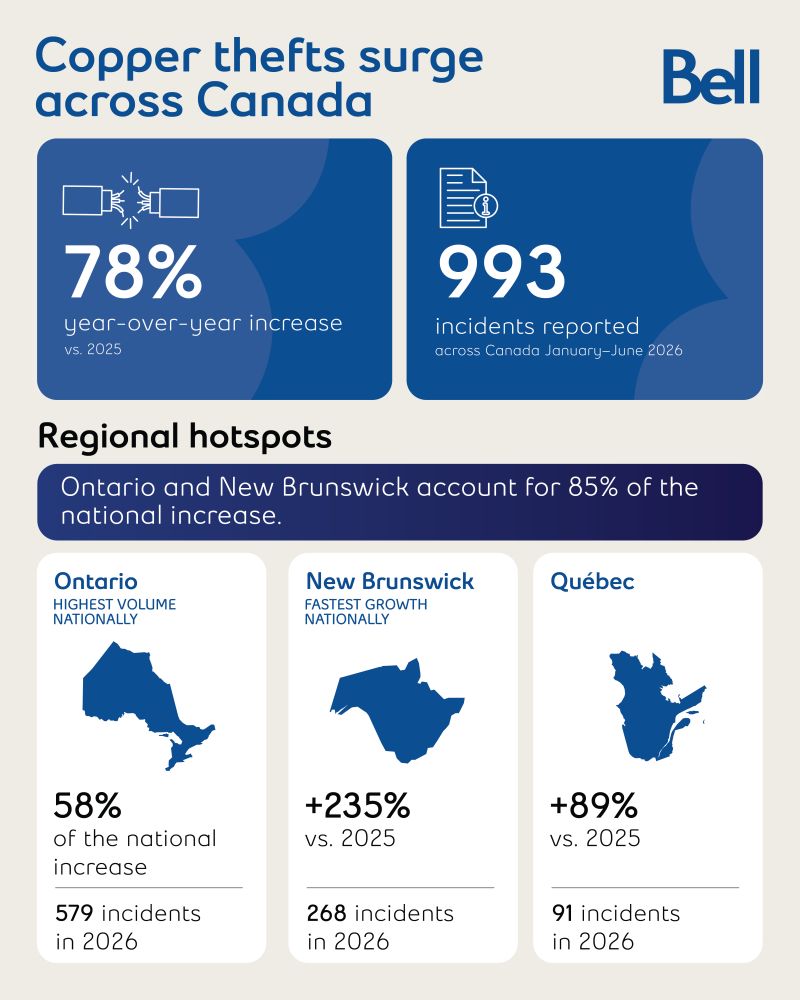
Telecoms are also seeing an increase in copper thefts. Bell Canada reported a 78% increase in copper thefts, with just under 1000 incidents reported across the country in the first six months of 2026.
“In many cases, the resale value of stolen copper is minimal compared to the harm caused. A small amount of metal can result in major service disruptions, costly and complex repairs, and potential risks to public safety by affecting access to 911 and emergency services,” the telecom said in its press release.
“Ontario and New Brunswick are at the epicentre of the issue, together accounting for 85% of the national increase. Ontario continues to represent the highest volume of incidents, with 579 cases — 58% of the national total. Theft activity is particularly concentrated in Hamilton, Niagara and Milton, which remain among the hardest-hit areas in the province. Meanwhile, New Brunswick is seeing the fastest growth, with 268 incidents so far in 2026, a 235% increase compared to 2025.”
CBC reports that charger cable thefts have cost BC Hydro close to $1 million in replacement costs. Since October 2025, BC Hydro has seen around 130 cables go missing. In the first six months of 2026 Hydro Quebec saw 20 incidents, compared to nine in the first six months of 2025.
Signature Electric, a Markham based company, has responded to the trend by offering reinforced cables, “With this solution, the charging cable is wrapped in a series of flexible steel cables,” the company says on its website, “then bound with heat-shrink tubing. The cables remain flexible and just as usable, but far more durable and resistant to tampering.”
SWTCH has also introduced an intelligent anti-theft solution for EV chargers.
The copper in EV charging cables isn’t easy to access and extract from the cable to begin with and there is certainly a safety risk. The amount of the copper in the cables is limited, the cost to replace cables significantly out paces resale value.
“Recently, several of our EV charging sites across the province have been impacted by cable theft, including the Port Moody Recreation Complex,” BC Hydro’s Susie Rieder, told the Vancouver Sun in July of this year after an incident at the aforementioned location. “Tampering with or removing electrical equipment is extremely dangerous and can pose a serious risk of injury.”
“While the copper inside charging cables has a relatively low resale value, these thefts create costly damage and disrupt service for customers who rely on public charging infrastructure every day,” she said.
A report commissioned by the Senate of Canada, Stolen Signal: The Costly Consequences of Copper Theft in Canada, published in April 2026, provides three recommendations that includes regulating the sale of scrap metal to keep record of transactions and the origin of the metal, as well as the development of a task force on the metal theft, and amendments to the Criminal Code to impose serious penalties for thefts that cause significant damage to critical or essential infrastructure.
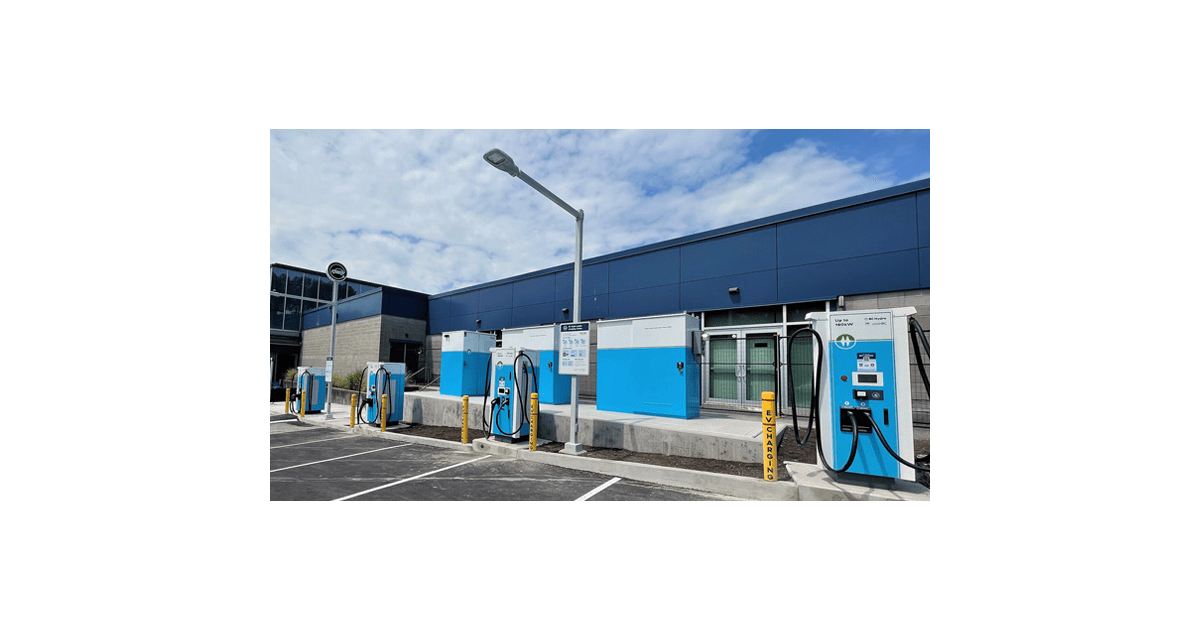
Feature image is from BC Hydro’s announcement on the Port Moody EV charger installation at the Recreation Centre in June 2025.