Ontario Quietly Drops Emissions Targets and Action Plans in Fall Economic Statement
November 12, 2025
As part of Ontario’s Economic Outlook released this month, Ontario quietly removed a section of the Cap and Trade Cancellation Act that requires the province to set emissions targets, develop a climate change plan, and report on progress to support goals.
“It’s unclear how Ontario expects to achieve measurable results on reducing emissions and accelerating low-carbon competitiveness without setting a credible climate target or a plan to achieve it,” Canadian Climate Institute President, Rick Smith, said in a statement.
“Reducing Canada’s emissions is a shared responsibility for governments across the country. The Canadian Climate Institute’s research shows that climate progress is most effective when both provincial and federal governments take accountability for setting credible targets and developing and executing credible action plans. Publishing progress reports along the way is also an essential tool to keep the public informed on what’s working and where more action is needed.
“Put simply, what you don’t measure, you can’t manage. It’s disappointing to see Ontario walking away from basic transparency and best practices for tackling climate change.”
“If Ontario wants to succeed in diversifying its markets and expanding trade with regions beyond the United States such as Europe and Asia, it must keep pace by investing in clean energy technologies and implementing a credible climate plan that supports competitiveness and affordability.”
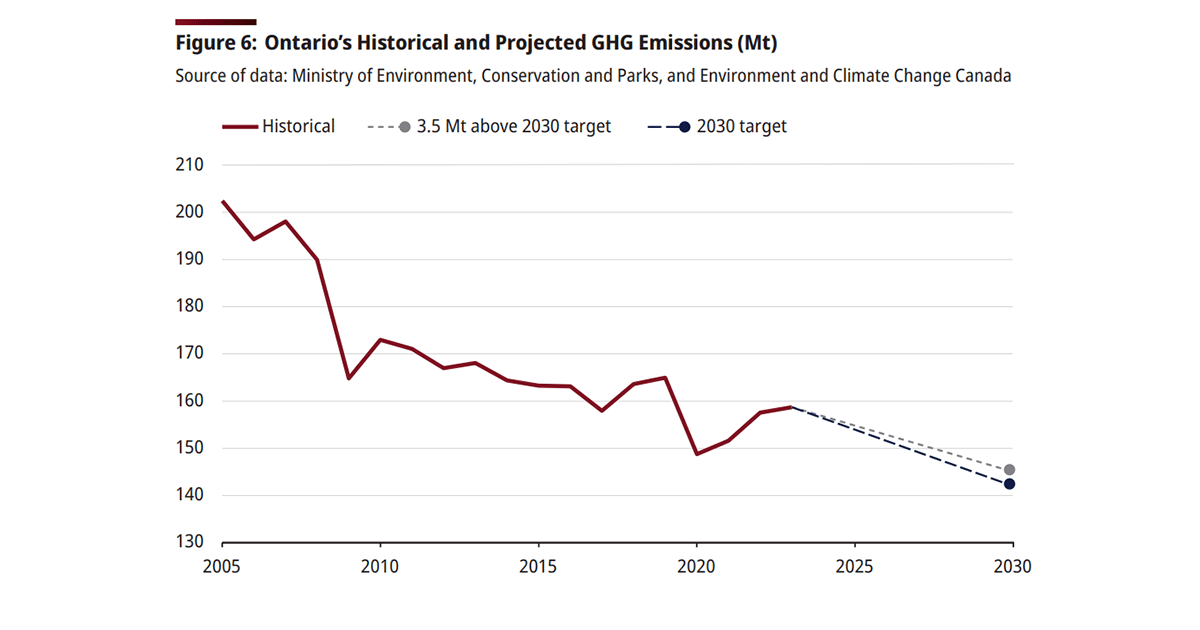
A report from Ontario’s Auditor General released earlier this year found that Ontario will miss its 2030 by more than 3.5 megatons.
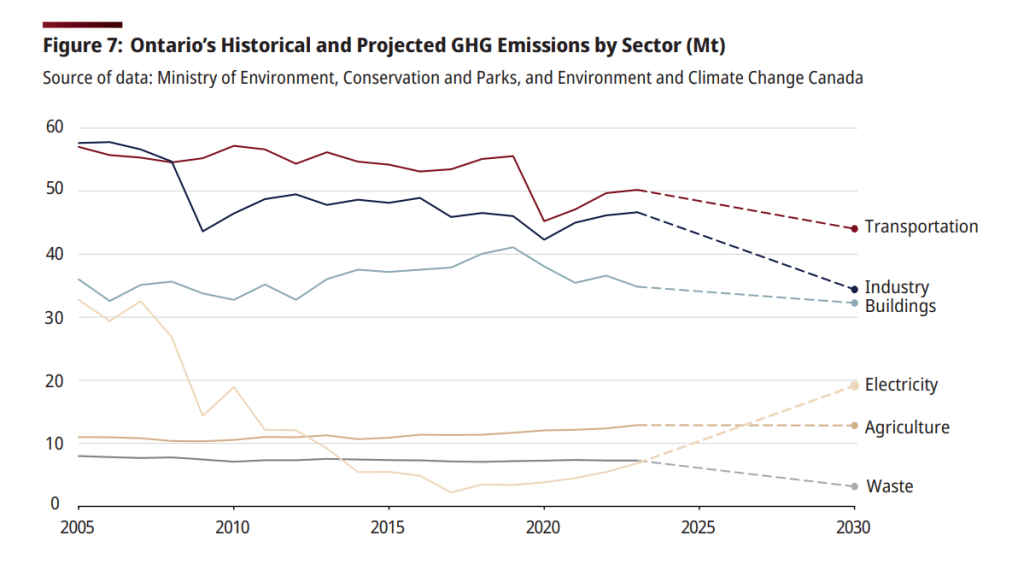
To meet 2030 goals, the report said, Ontario would have to remove the equivalent of 3.7 million (47%) fossil-fuelled passenger vehicles from the roads. The report concluded that Ontario would miss its targets by a wider margin than initially projected, as they over-estimated GHG emissions reductions in every sector. From transportation to industry, buildings, agriculture, waste sector, and the electricity sector.
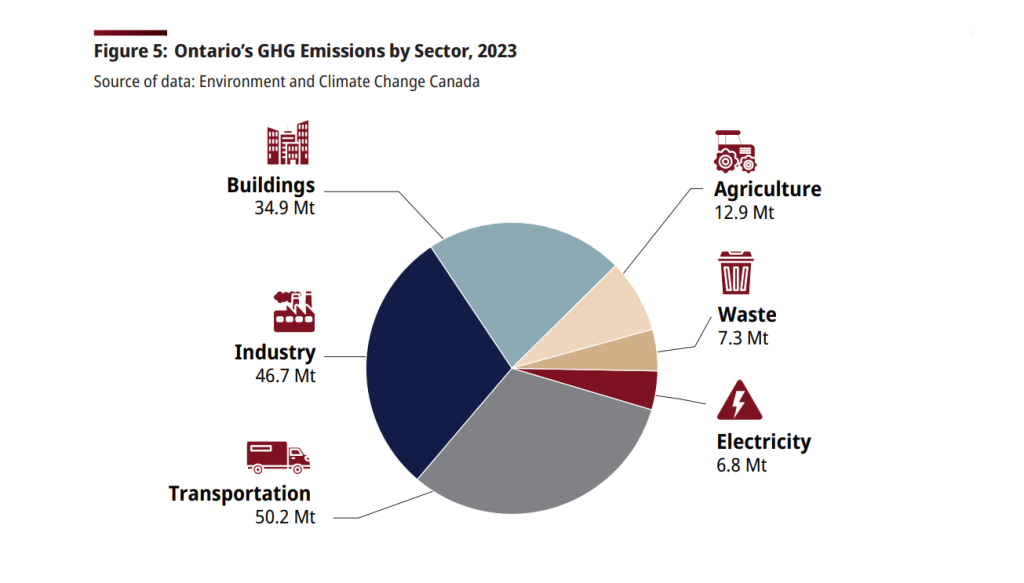
With respect to the electricity sector, projects rely on nuclear plants coming online by 2030, if those projects are delayed, the province may need to rely more on natural gas, particularly as demand is projected to increase.
Ontario reduced GHG emissions 22% from 2005 to 2023, which was attributed to the elimination of coal generation plans, reduced industrial activity during 2008 recession, and reduction building heating demand during the COVID-19 pandemic.