Electricity Sector Employment Grows Sharply, Reflecting a Rapidly Changing Electricity Grid

April 27, 2026
Employment in Canada’s electricity sector grew sharply by approximately 19% between February 2025 and February 2026, adding roughly 21,000 jobs, according to Statistics Canada data.
This growth stands in sharp contrast to the broader Canadian economy, where employment gains were muted and labour force growth outpaced net job creation, contributing to rising unemployment and softer labour‑market conditions. Against this backdrop, the electricity sector’s performance underscores its expanding role as a driver of industrial growth, economic resilience and long-term system reliability.
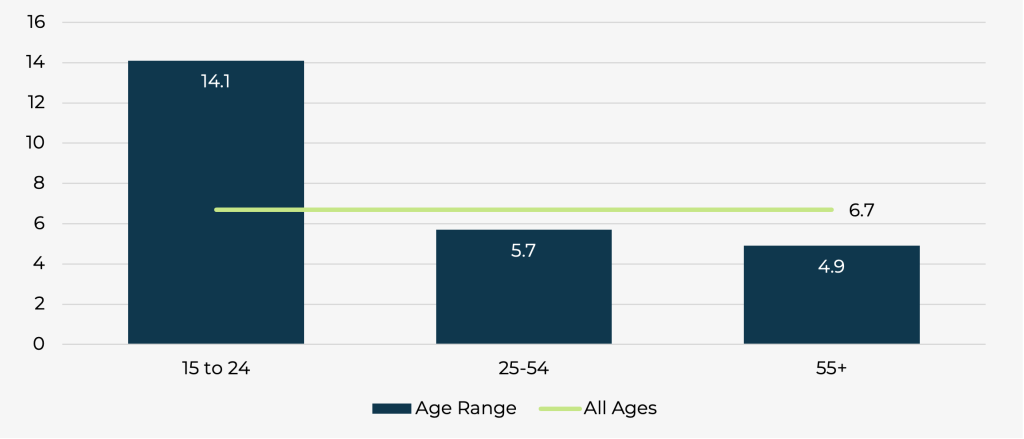
Figure 1: Unemployment (%) by age group, February 2026
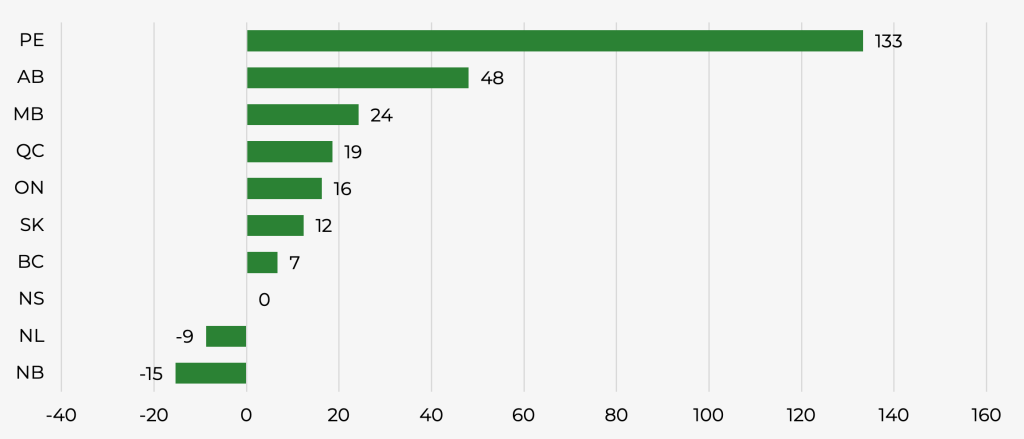
Employment gains were particularly strong growth in Alberta, Manitoba and Quebec. Electricity Human Resources Canada (EHRC) has been tracking these trends through its ongoing analysis of labour force data, drawing on Statistics Canada data to publish monthly insights into workforce conditions across the sector. Although these trends are based on surveys of workers, these updates have shown steady, incremental growth over the past twelve months that substantiate a meaningful year-over-year increase.
The sustained expansion of the electricity workforce reflects mounting investment across generation, transmission and distribution, as well as grid modernization and the integration of low-emissions electricity sources. These developments are reshaping skills demand and creating new career pathways while increasing the importance of coordinated workforce planning.
As the sector evolves, ongoing skills development will remain critical, particularly through training aligned with the growing role of renewable and low-emissions electricity sources.
“While some employment growth was expected, this rate of increase underscores both the pace and scale of change underway in Canada’s electricity sector,” said Michelle Branigan, CEO of EHRC. “Sustaining this momentum will require deliberate action to ensure the workforce continues to grow and adapts alongside evolving technologies, operational demands and system requirements. Reliable labour market intelligence is essential to aligning skills development, expanding labour supply and ensuring the sector has the capacity needed to support Canada’s energy future.”
Figure 2: Change in employment by sector (%), February 2025–February 2026
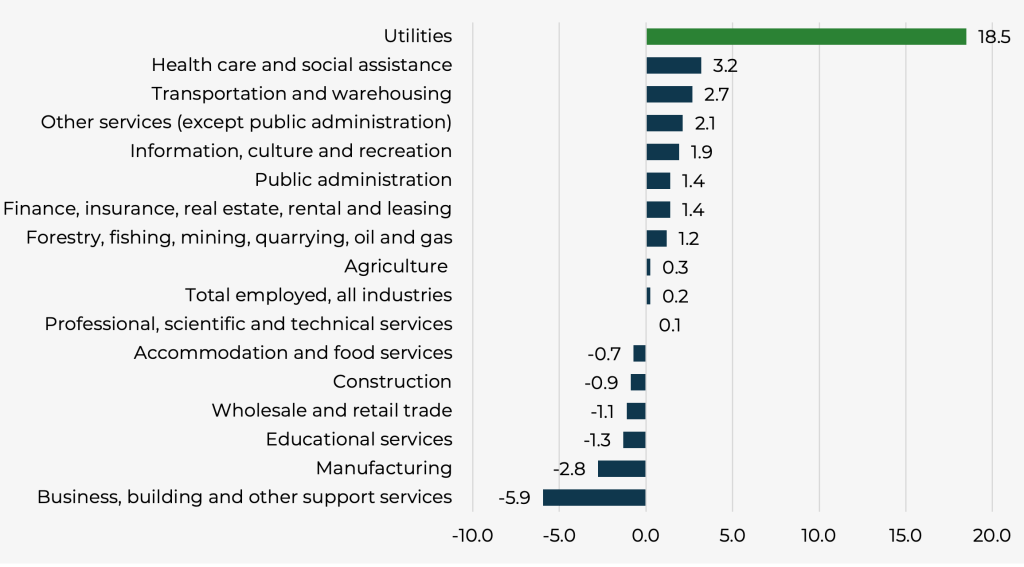
Figure 3: Change in utilities employment by province, February 2025–February 2026
Looking ahead, continued workforce growth will depend on expanding participation across the labour market. Making electricity workplaces more inclusive for women, newcomers to Canada, persons with disabilities and other equity‑deserving groups will remain central to long-term workforce needs.
At the same time, digitalization and emerging technologies, including artificial intelligence, are expected to play an increasing role in supporting productivity and workforce sustainability when implemented responsibly. EHRC’s research emphasizes the importance of aligning technology adoption with workforce development to ensure innovation complements and strengthens sector capacity.
EHRC will continue to publish monthly labour force updates and sector-specific research to support employers, educators, labour organizations and policymakers as the electricity sector navigates a rapidly evolving workforce landscape. Explore EHRC’s latest Labour Market Intelligence at ehrc.ca/labour-market-intelligence.
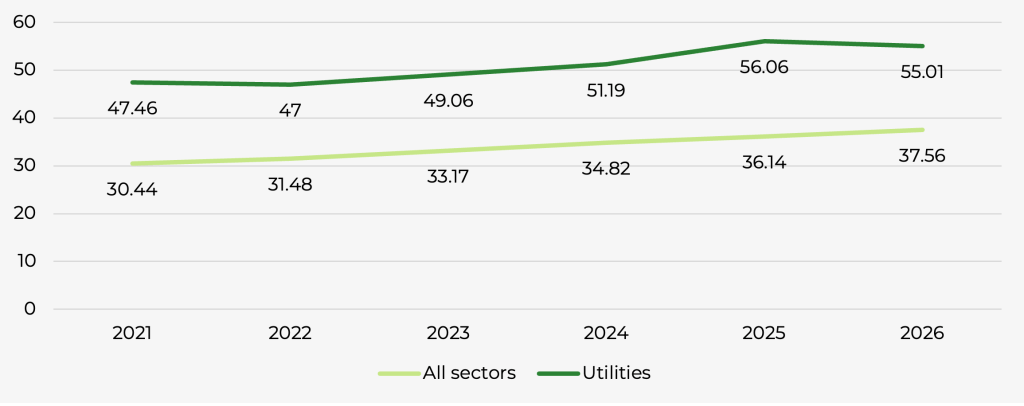
Figure 4: Average hourly wages, utilities vs all sectors: February 2021–February 2026