Hydro-Québec & Newfoundland and Labrador Hydro Sign a Definitive Cooperation and Implementation Agreement
August 24, 2026
This enhanced agreement lays the foundation for the largest renewable energy project in North America.
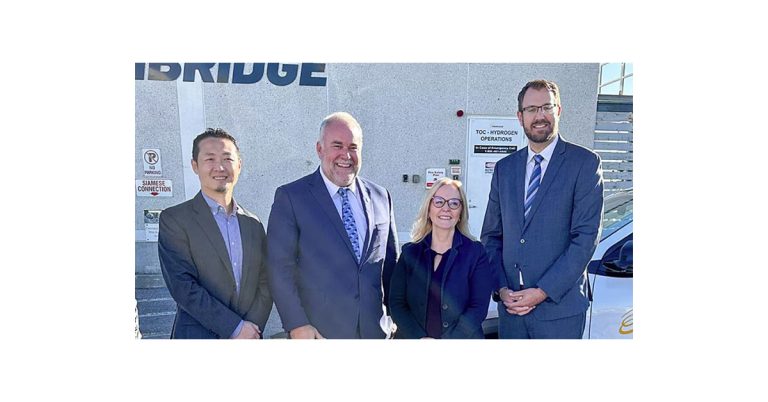
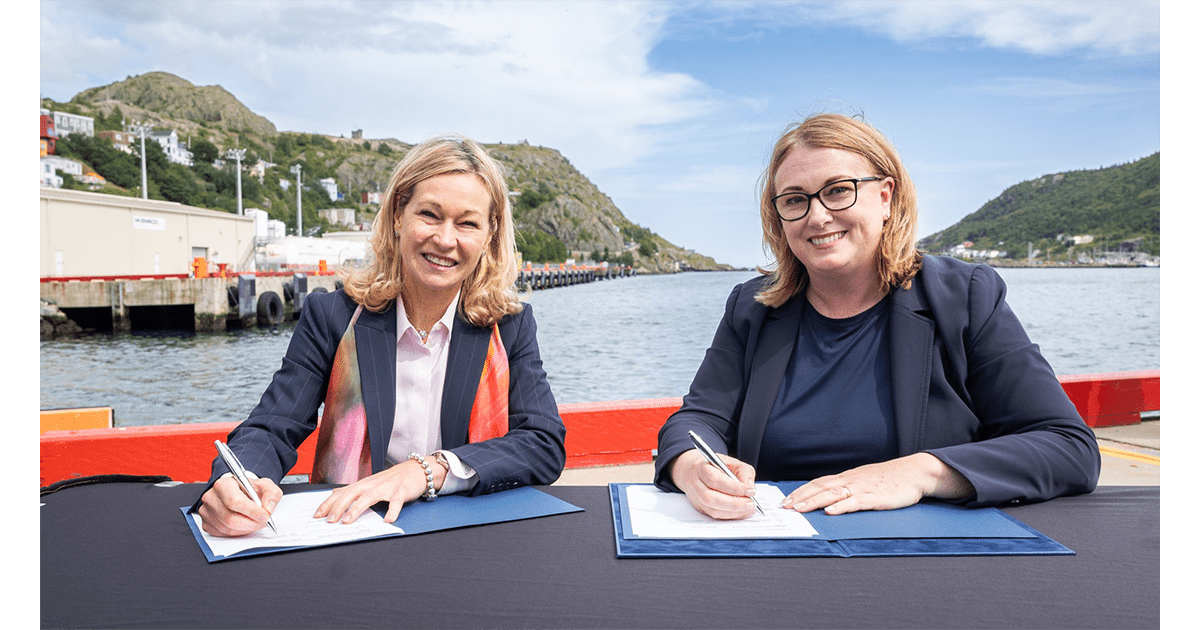
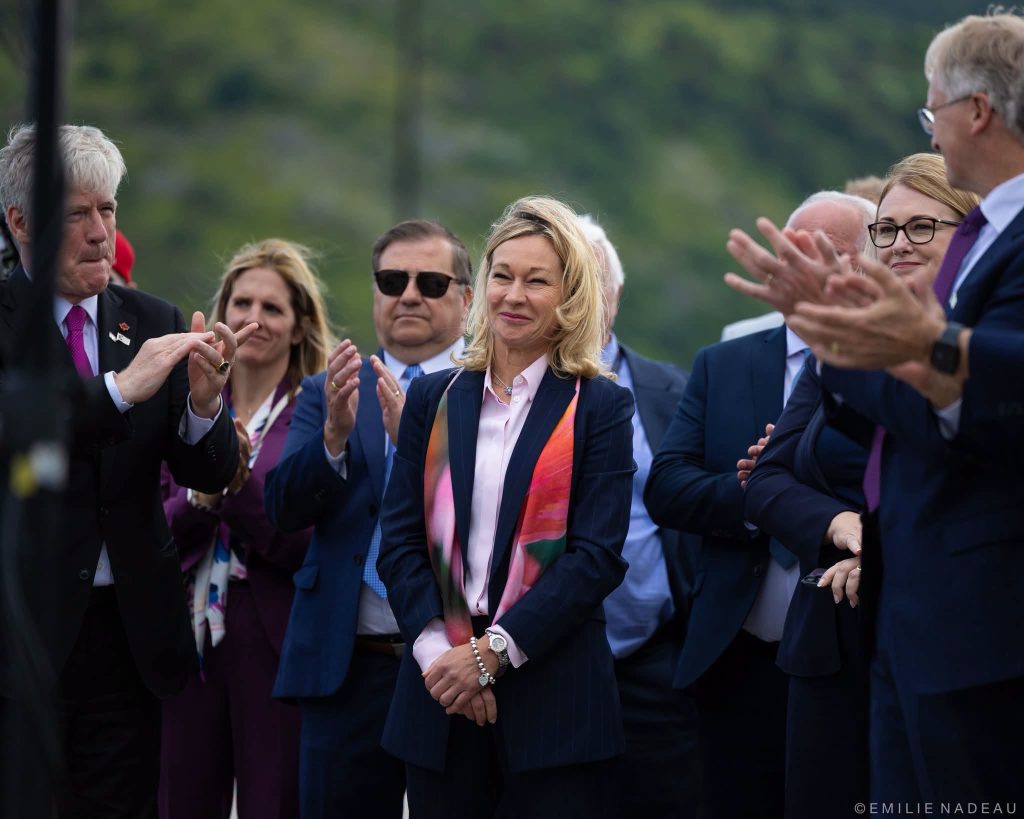
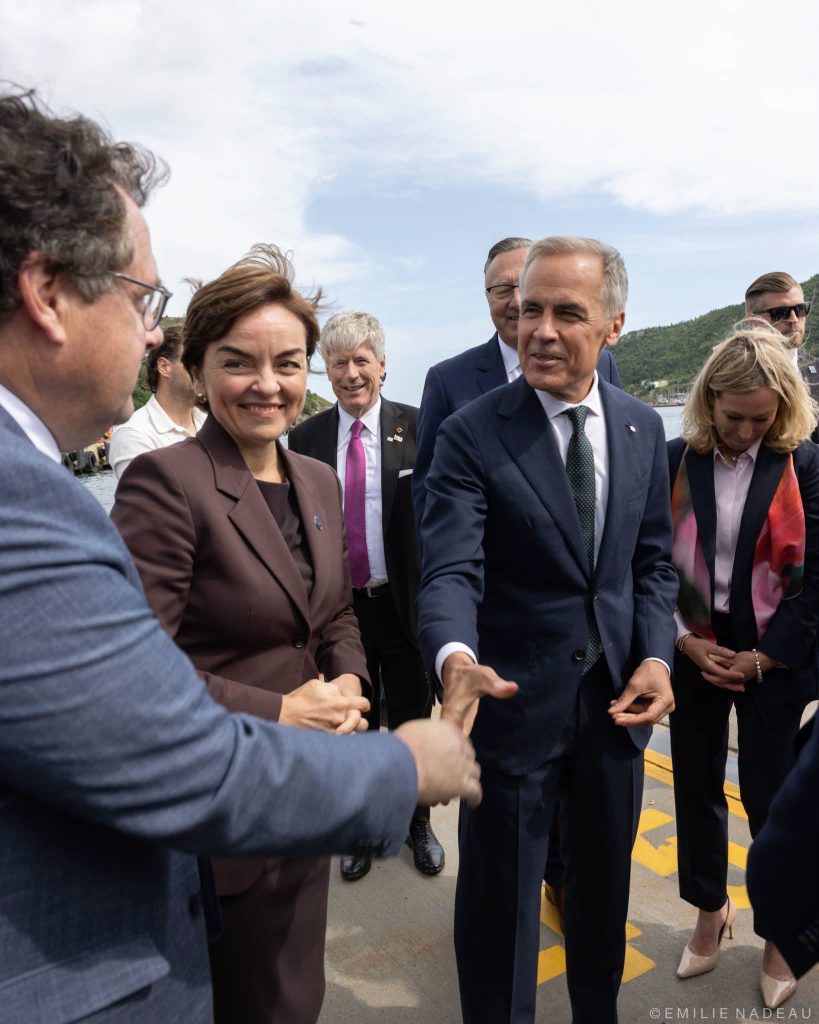
Tony Wakeham, Premier of Newfoundland and Labrador, joined Mark Carney, Prime Minister of Canada, and Christine Fréchette, Premier of Quebec, and representatives from Newfoundland and Labrador Hydro and Hydro-Quebec to announce a new deal to develop Churchill Falls and Gull Island, while delivering more power, more value and more transmission for both provinces.
For Hydro-Québec, it provides access to a total potential of over 10,000 MW of electricity from Labrador, equivalent to double the current production. From this, 6,915 MW are firm and 3,850 MW are associated with the potential of projects currently under study. In comparison, the 2024 memorandum of understanding provided for a total potential of 7,200 MW.
As part of a new agreement, Newfoundland and Labrador will now be able to retain up to 2,350 MW of electricity from Churchill Falls and Gull Island, 360 MW more than the 1,990 MW promised in the original 2024 MOU. In addition, the Federal Government has agreed to invest in a new 2,000 MW Churchill Falls wind project attached to the deal which will provide Newfoundland and Labrador with an additional 400 MW of its generated output, resulting in the province receiving 760 MW more overall power. Over the course of the deal, Newfoundland and Labrador will maintain complete optionality in how its allotted power from the Churchill Falls base power plant is deployed, with the choice to either keep power for its own industrial development or, alternatively, to sell it, with Hydro-Quebec agreeing to purchase this power at a 150 per cent price premium over base PPA prices.
Specifically, this agreement will:
- Secure more electricity (6,915 MW):
- Guarantee supply from Churchill Falls until 2077.
- Increase supply for Québec:
- Churchill Falls capacity increase revised upward.
- Construction of Gull Island generating station and addition of a supplementary generating unit.
- Enable the study of new projects (3,850 MW):
- Wind farm in Labrador.
- Hydroelectric facility in Churchill Falls.
- Take advantage of existing Government of Canada financing totalling $6.5 billion, without governance rights.
As part of this agreement, the federal government will provide $10 billion in federal financing to:
- Upgrade and expand the Churchill Falls Generating Station.
- Develop the massive Gull Island hydroelectricity project.
- Unlock co-investment opportunities with the Innu of Labrador in a major new Labrador onshore wind project.
- Build associated transmission lines.
The 2026 DCIA will therefore strengthen Hydro-Québec’s energy portfolio for the next 50 years at a cost lower than that of the 2024 agreement and one-third the cost of the alternatives. Note that the projected generation cost beyond 2035 is approximately 17¢/kWh.
Further, Hydro-Québec will be able to purchase NL Hydro’s surplus electricity under a preestablished pricing mechanism.
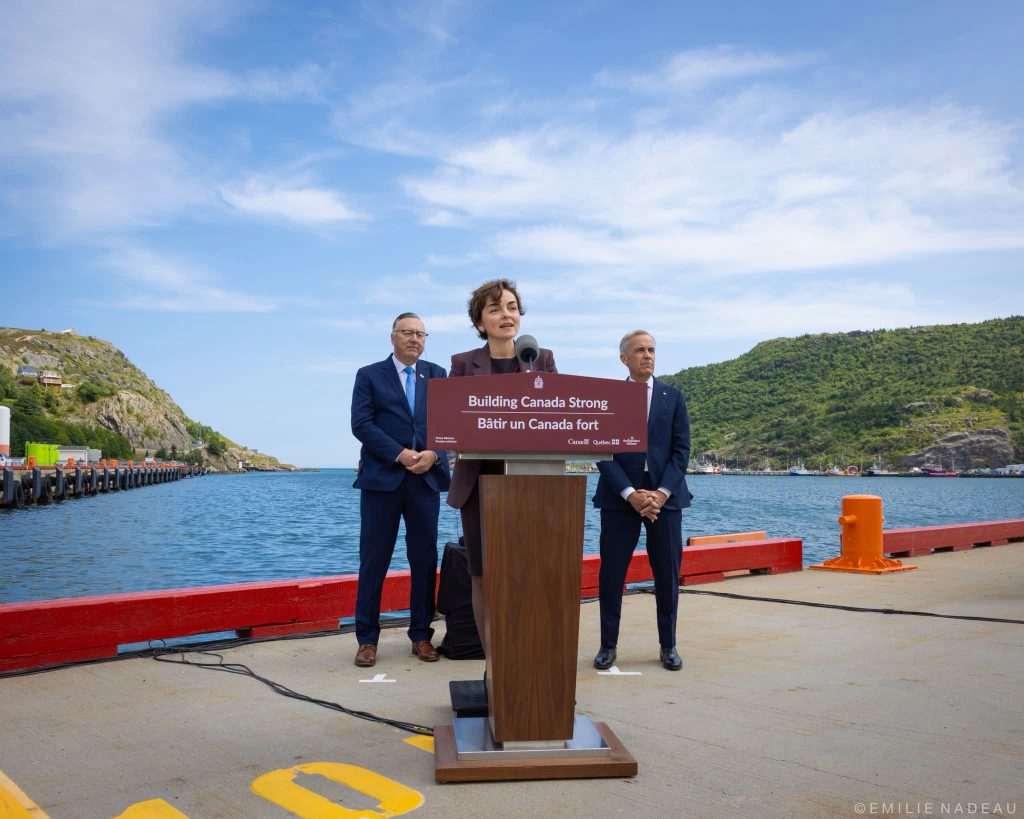
Together, these projects represent the largest clean energy investment in North American history, at nearly $70 billion. They will generate 14,000 megawatts of clean, renewable power – nearly tripling the current generating capacity of Churchill Falls. That is enough power to light, heat, and cool all the homes in Toronto, Montréal, and Vancouver combined. These projects will support 23,000 jobs – from the skilled trades to engineering – and contribute $31 billion to Canada’s GDP through the early 2040s.
“When energy resources are effectively shared across provinces, Canadians benefit through more affordable and resilient electricity systems, as well as the economic benefits such as local job creation and further investment,” commented David Pickup, director of the Pembina Institute’s Electricity program. “However, in order to fully capture the benefits of the energy transition, new policies are required to build an electrified economy — the electrification of Canadian transportation, industry and buildings. This is an area where the federal government is falling short, particularly in the transportation sector where policies to drive electric vehicle adoption have been repealed while replacement policies are delayed. We urge the government to get back on track with the full scope of its electrification strategy.”
The Labrador Trough is a world-class mining region across Newfoundland and Labrador and Québec, with significant sources of high-purity iron ore. To harness this strategic asset and create high-paying careers for Canadian workers, the government announced the referral of the Labrador Trough Clean Power, Critical Minerals and Infrastructure Corridor to the Major Projects Office (MPO). The MPO will coordinate and structure federal financing, accelerate permitting requirements, and work with Indigenous Peoples to forge meaningful partnerships.
In addition, Canada’s new government will support strategic, pre-development projects in the Labrador region, funded under the First and Last Mile Fund (FLMF) through Natural Resources Canada.
This includes the following projects:
- Labrador West Transmission Expansion to assess the transmission infrastructure needed to connect critical minerals mining operations in western Labrador to the electricity grid, supporting regional opportunities and mine electrification.
- Kami Iron Mine Partnership’s project to undertake planning and feasibility work for the transportation and energy infrastructure required for the large-scale Kami iron ore project near Wabush, Newfoundland and Labrador.
- Focus Graphite’s project to undertake pre-construction work for a new transmission line and road connecting the Lac Knife graphite project to Hydro-Québec’s power grid, advancing the development of projects that will support the battery and energy storage technologies this country and our allies need.
- SFP Pointe-Noire’s project to expand critical minerals handling capacity and related rail infrastructure, strengthening a key transportation gateway for mining production in the Labrador Trough.
Quick facts
- Today’s agreement is the largest clean energy investment in North American history, nearly tripling the current generating capacity of Churchill Falls. Together, these projects will deliver 14,000 megawatts of clean, renewable power, support 23,000 jobs in the construction phase alone, and contribute $31 billion to Canada’s GDP through the early 2040s.
- The agreement advances:
- Canada’s National Electricity Strategy, which aims to double the capacity of our grid by 2050 and supply clean, reliable, affordable power across the country for decades to come.
- The Atlantic Energy Strategy, which was referred to the Major Projects Office in the fall of 2025. The Strategy focuses on developing renewable and non-emitting energy across Atlantic Canada – onshore and offshore wind, nuclear, and hydro – to meet rapidly growing demand across Eastern and Atlantic Canada and beyond.
- Today’s investments strengthen the interprovincial grid and the export infrastructure that carry clean, affordable power and Canadian resources to markets at home and abroad.
- The Labrador Trough is a world-class mining region stretching across Labrador and Québec. With significant sources of high-purity iron ore, it is a strategic asset for decarbonising global steel supply chains, reinforcing Canada’s leadership in both renewable energy and critical minerals, and giving Canada a significant competitive advantage in the transition to a cleaner economy.
- Strategic, pre-development projects in the Labrador region will be supported through the First and Last Mile Fund (FLMF). The FLMF is backed by $1.5 billion in federal funding announced in Budget 2025. It supports infrastructure that unlocks new mines and moves Canada’s resources to customers at home and abroad. Recognising that most critical minerals deposits and enabling infrastructure projects in Canada are located on Indigenous territories, the FLMF makes specific funding available to enable Indigenous leadership, engagement, and participation throughout the mining value chain.
- On clean energy, Canada already leads from a position of strength: the lowest residential electricity costs in the G7, the second-lowest industrial electricity costs in the G7 and the OECD, and the second-highest share of clean electricity generation in the G7. Today, approximately 80% of Canada’s electricity generation is non-emitting.
- To build on that advantage, Canada’s new government is advancing strategic investments in the modernisation and expansion of the country’s electricity infrastructure, including:
- Major Clean Economy Investment Tax Credits for clean electricity, clean technology, and carbon capture, utilisation, and storage.
- Strategic financing through the Canada Infrastructure Bank (with a $20-billion clean energy target), the Canada Growth Fund, and the Indigenous Loan Guarantee Program (envelope doubled from $5 billion to $10 billion).
- A new Productivity Super-Deduction, enhanced tax incentives covering all new capital investment, which allows businesses to write off a larger share of the cost of these investments right away.
From the Backgrounder:
First and Last Mile Fund
The First and Last Mile Fund (FLMF) is an envelope of $1.5 billion for infrastructure that will unlock and bolster new critical minerals mines and economic growth, including projects that move Canada’s resources to customers at home and abroad. Recognising that many of these projects occur on Indigenous territory, the FLMF also provides dedicated funding to support Indigenous leadership, engagement and participation in critical minerals development and enabling infrastructure projects.
Project name: Projet d’infrastructures de transport des minéraux critiques – Fosse du Labrador Recipient: Société ferroviaire et portuaire (SFP) de Pointe-Noire
Location: Sept-Îles, Quebec
Funding amount (up to): $14,848,155
Description: In order to advance the port’s readiness for future investment and expansion, this project will complete a detailed engineering study on how to expand the Sept-Îles Port’s handling capacity from 21 to 38 million tonnes per year. Planned improvements include upgrades to rail infrastructure, the addition of high-capacity unloading systems to increase the flow of iron concentrate shipments and optimising existing storage areas to improve overall efficiency.
Project name: Labrador West Regional Transmission Expansion Study
Recipient: Newfoundland and Labrador Hydro
Location: Near Labrador City and Wabush, Newfoundland and Labrador
Funding amount (up to): $2,341,766
Description: This study will complete front-end engineering and design (FEED) for the transmission lines and stations needed to bring more power to the Labrador West area. The proposed infrastructure would help support the expansion and electrification of existing mining operations and enable future critical minerals development. The study includes geotechnical investigations, development of cost and schedule estimates, and identification of requirements for environmental assessments. Study participants include Tacora Resources (Scully Mine), Rio Tinto IOC (Carol Lake Mine), Champion Iron (Kami Iron Ore Project), and the Government of Newfoundland and Labrador (Julienne Lake Deposit).
Project name: Lac Knife Graphite Mine Connection to Hydro-Québec Power Grid and Access Road
Recipient: Focus Graphite
Location: Lac Knife, Quebec
Funding amount (up to): $1,378,700
Description: This project will complete pre‑construction work for an 8‑km all‑season Class 1 gravel road that will replace an existing seasonal maintenance road and connecting the mine site to Highway 389, as well as a new 50‑km, 34.5‑kV transmission line linking the site to Hydro‑Québec’s transmission corridor near Fermont, Québec. This includes technical studies, engineering, feasibility and environmental studies, planning and design, permitting, and Indigenous engagement.
Project name: Transportation and energy infrastructure for the Kami high-purity iron ore mining Project
Recipient: Kami Iron Mine Partnership
Location: Southwest of Wabush and Labrador City, Newfoundland and Labrador
Funding amount (up to): $439,844
Description: This contribution will support the completion of preconstruction, feasibility and regulatory planning for energy and transportation infrastructure required for the Kami high-purity iron ore mining project. High-purity iron ore plays an essential role in the decarbonisation of the global steel industry. Steel is one of the most widely used materials and is fundamental to manufacturing, construction, transportation, and infrastructure projects in Canada and around the world.
Financial Support for Clean Electricity Projects
Churchill Falls upgrades: Expand and extend the lifetime of the existing Churchill Falls strategic electricity generation facility. Upgrades will be made to the 11 turbine units (with one turbine expected to come online each year) at the existing Churchill Falls hydroelectric facility in Labrador to increase capacity by 1,275 megawatts (MW), a 30% efficiency increase for existing turbines. The Churchill Falls expansion will increase capacity by up to 2,500 MW.
Gull Island: Construction of a new 2,700 MW hydroelectric facility located on Churchill River between Churchill Falls and Muskrat Falls. The project is expected to be online between 2036-2037 and is expected to produce about 12 TWh in power which will substantially increase reliable electricity supply for Atlantic Canada and Central Canada. It will also facilitate industrial development and the buildout of more variable renewables in the region, including in neighboring provinces. Gull Island underwent a federal environmental assessment in 2012 as part of the Lower Churchill Hydro Electric Generation Project.
Transmission for Churchill River projects: Construction of transmission lines (660km+) and power infrastructure to enable Churchill Falls and Gull Island to deliver electricity to the Quebec border.
Labrador West Transmission: Construction of a new 735kV transmission line from Churchill Falls to Labrador City to provide new power to the region to serve homes and enable industrial load growth and increased critical minerals development. The existing transmission line serving Labrador City and Wabush / Labrador Trough region are running at maximum capacity. As such, a new transmission line is required to support population growth and to enable new resource development that could create hundreds of new full-time mining jobs and meaningful partnership opportunities with Indigenous groups.
Onshore Wind: Proposed development of 2,000 MW of onshore wind in Labrador, with location and other details under consideration by Newfoundland and Labrador Hydro.