How to Build an Autonomous IoT Network for Utilities and Smart Cities

August 10, 2026
Using 5G to enable reliable autonomous operations in Canada provides more than faster insights, it provides scale and repeatability.
By Jason Falovo
Modern energy grids are distributed, dynamic, and require two-way communication to keep their system balanced. The sheer size of these distributed systems and increased pressures from climate-related conditions mean that energy providers require grid-wide coordination to ensure that they’re able to maintain power delivery to their customers with minimal disruption. Today most providers are already taking advantage of Internet of Things (IoT) sensors to ensure they have the visibility needed to quickly manage any developing situations. The next step in that journey is autonomous IoT: systems that not only able to sense trouble but also take steps to mitigate potential outages, giving providers extra time to make informed decisions and take preventative actions.
As smart cities and smart grids are developed, autonomous IoT deployments become critical to monitoring and managing large-scale, sensor-rich environments. The payoff of autonomous IoT often appears in service continuity and faster recovery during disruption. While the problems autonomous IoT systems can solve are complex, their deployment is surprisingly straightforward, underpinned by a backbone of robust 5G connectivity which provides the seamless communication needed to maintain visibility.

Defining Autonomous IoT
Simply put, for energy providers and smart cities, autonomous IoT systems close the gap between detection and action, between monitoring and mitigation. In these systems data is constantly exchanged between equipment, field devices, utility meters, cameras, and control systems. In these scenarios, the sheer amount of data being generated means that human operators are able to monitor the conditions in grids and smart cities more closely than ever before. This is essential to the idea of autonomous IoT systems, which unlike some types of AI-adjacent systems, are not about eliminating human operators, but augmenting their ability to manage these increasingly complex systems.
The difference between traditional IoT deployments and autonomous IoT is often in the speed of response. In most modern energy grid environments, even if they are already taking advantage of sensors, a human manager must still review outputs and decide what should happen next. An autonomous system can recognize a condition, interpret it within defined bounds, and trigger a timely response without human input. Again, this is typically construed as an artificial intelligence system, but ensuring highly reliable connectivity between the system components is even more important. If readings are too late, if systems can’t stay synchronized, or if control signals fail under pressure, the loop breaks. The system may still generate insight, but it can’t deliver dependable action.
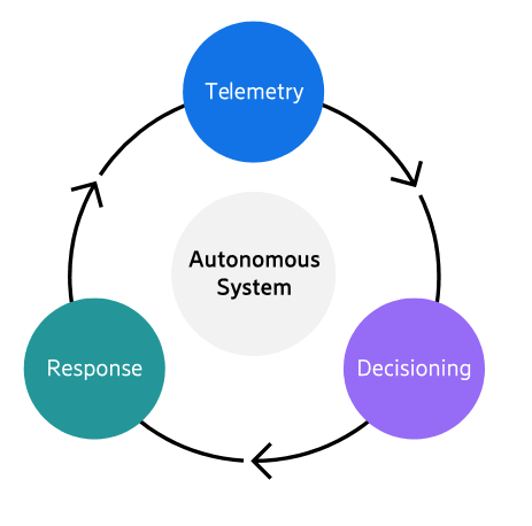
It should be no surprise that rugged, dependable communication is the backbone of these large-scale autonomous IoT deployments. Communication must remain flowing between sensors, systems, and human managers, sometimes across very large areas. Because data determines how autonomous systems can scale, 5G connectivity is quickly becoming the foundation of these deployments. The trouble is, these autonomous deployments are often piloted in much smaller, limited scenarios where other connectivity solutions might be feasible, but when scaled across an entire utility’s territory, or an enterprise fleet, gaps in communication are exposed. The benefit of 5G is not just in speed but in maintaining the loop of telemetry, decision-making control, and response coordination which defines these autonomous systems. Because these systems are so sensitive to latency, data jitters, and environments with heavy data traffic, the most resilient and secure systems become essential to ensuring there is as little disruption as possible. Again, if the purpose of the deployment is to improve problem mitigation times, increase the breadth and depth of telemetry, and provide more time for human responders to deliver long-term solutions, then 5G becomes essential to operationalizing autonomous IoT systems.
Autonomous IoT Systems in Canada
Canada provides an exceptional use-case for autonomous IoT systems since its geography is incredibly vast and varied across both urban and rural areas. Utilities, for example, frequently have to navigate the challenges of both environments while dealing with the often extreme weather challenges that come with them. In May 2026, citing the electrification of industry including vehicles, industrial growth including AI data centre demand and battery manufacturing, and the building of new homes, the federal government unveiled a new national electricity strategy, a plan to double the capacity of the Canadian electricity grid by 2050. The strategy is forecast to cost $1 trillion by 2050. The strategy also includes plans to connect the currently fragmented and siloed provincial and territorial electricity grids to deliver more reliable power across the country.
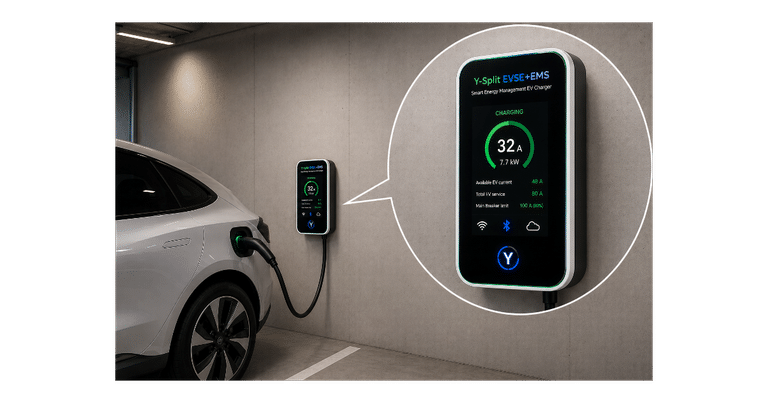
Zooming in on one part of this strategy, some places in Canada are already conducting major research and testing with autonomous and electric vehicles, creating new possibilities in sustainable transportation. For example, autonomous vehicles, which are typically cited as a major component of smart cities, are being researched and tested in Canada through projects with the federal government in places like Blainville, Quebec, at the Motor Vehicle Testing Centre, which has facilities to test and evaluate fully connected and autonomous vehicles. These types of vehicles are an excellent example of the type of connected devices which are supported by autonomous IoT systems and powered by 5G connectivity since they depend on properly functioning traffic signals, roadside sensors, and network infrastructure like electrical charging stations. If those services are interrupted, it can cause major disruptions in mobility. In these scenarios, the smart cities need critical software able to combine the readings from hundreds of sensors, but it also requires redundant connectivity, priority treatment for safety-critical traffic, always-on telemetry, and safe degradation so operations can continue locally or shift into a lower-risk mode instead of failing outright. Technologies like real-time kinematics (RTK) are supported by 5G connectivity to further improve autonomy in mobility and robotics. Researchers at McGill University in Montreal have even studied shared autonomous electric vehicles (SAEVs) which can provide mobility and use their batteries to support the grids in the case of electrical outages. Their findings demonstrated a strong need for coordination between implementation of these autonomous vehicles and urban planners because of the potential to support both energy resilience and mobility. Whether discussing RTK or SAEVs however, the major reason these systems are difficult to implement is that they depend on reliable connectivity that can preserve accuracy and continuity.
Edge Computing and the Value of Autonomous IoT
To support the complex decisions that must be made in autonomous vehicle or in smart grid scenarios, edge computing is essential. Edge computing means the sensor readings and computing power to operationalize the sensor data happens away from the central part of the system, typically at or near the sensors. This limits the amount of data that is carried across networks and helps support faster response times and more reliable transmission of data. Just as smart grids rely on distributed systems, so does autonomous IoT. These systems increasingly follow a distributed model in which computing units at the edge of the network — close to the environment — handle any time-sensitive decisions, while the central system is used to control and optimize performance across the wider system. Again, 5G is the communications layer, and provides stable communication to make this setup practical.
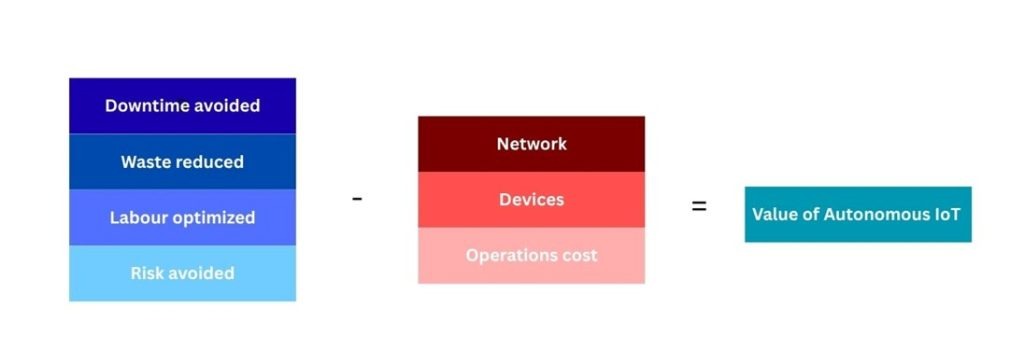
The implementation of robust 5G connectivity to support autonomous systems is framed then in operational terms. Its implementation creates business value through the increases in uptime, reduced waste, optimized human labour and delivery of services, and the avoidance of risks from environmental factors. Think of a gas leak or downed power line: the faster these critical situations are resolved the better, from detection through autonomous systems, to limiting environmental damage, and even saving lives in some cases. But not all situations must reach these critical levels. When these autonomous systems are able to sense trouble or potential issues early, preventative maintenance can also be deployed to keep problems contained. With 5G connectivity, the clarity and immediacy of data often mean value can be seen even without full-scale deployments, with some early results in smart energy grid environments leading to faster isolation of faults, lower waste, and better uptime.
Full-scale implementation is often a phased approach, with the first step being to assess workflows, identifying the places where quicker response times affect outcomes the most, and where it can create the most value. At this stage, leadership should ask themselves where would a faster response create the most value? The next phase involves designing a control loop where technical requirements are defined, sensors are determined, and the area of coverage and edge devices are mapped out. After the control loop has been created, a pilot project is typically implemented to test the proof of concept and determine how the project will scale. With a successful pilot underway, the plan moves from a specific use-case to operationalizing the model across the organization before a final step of scaling the project up with control and safety measures in place for failover scenarios.
As Canada continues its energy transition and growth with major investments and change through 2050, autonomous IoT systems powered by robust 5G connectivity are poised to provide the backbone for the scale these systems are attempting to reach. The payoff for organizations is not just about powering sensors but about making these systems scale reliably. The outcomes are measurable in terms of performance, uptime, and detection and response. More than enabling autonomous IoT in theory, 5G helps make these systems repeatable in practice.